10% OFF FOR ALL NEW CLIENTS! Use Code "NewClient10"

Why does scalp massage feel so good?
And is it actually doing anything?
4/7/20262 min read
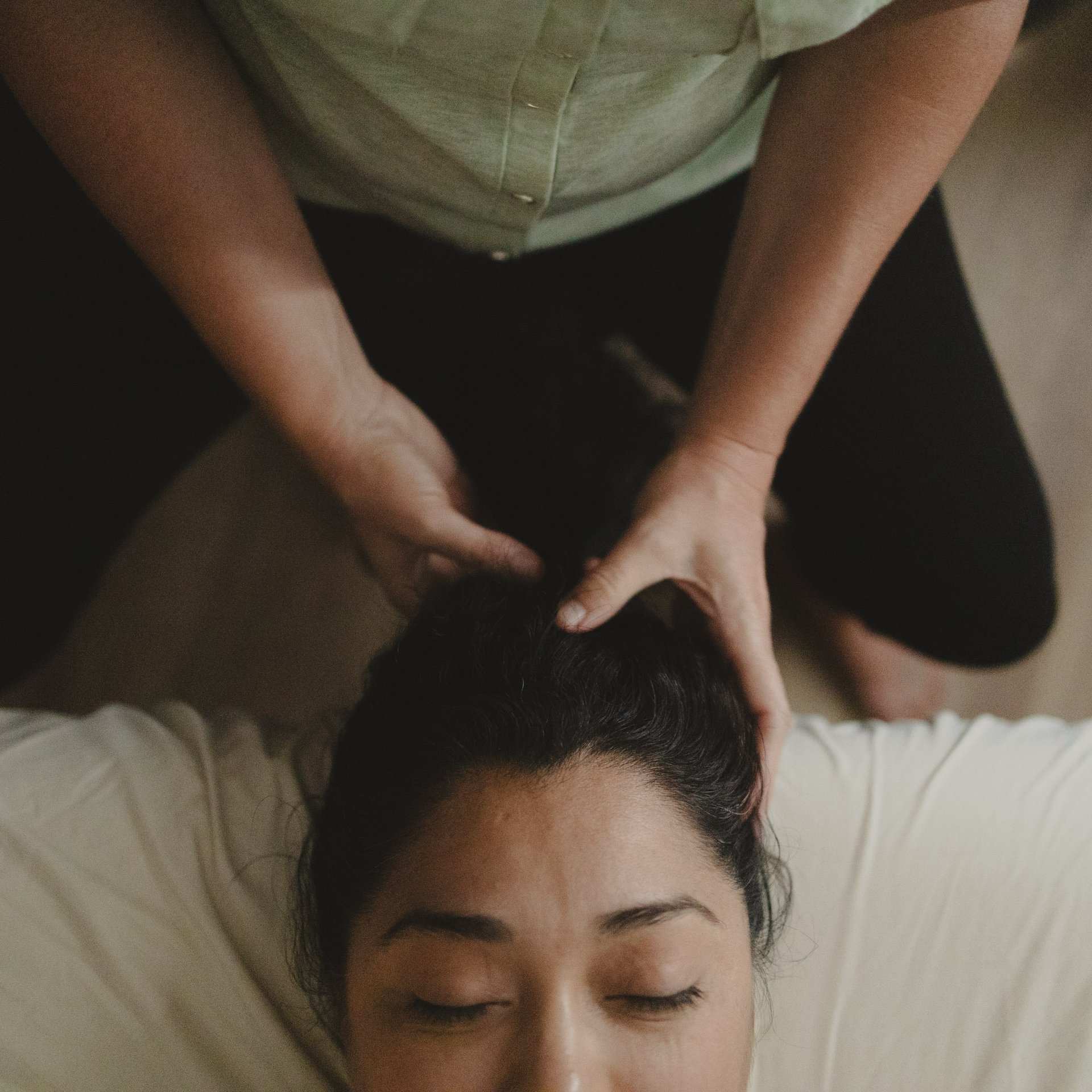
One of my favorite parts of a massage session is the scalp.
Sometimes I feel like I could easily spend the entire session just working on the scalp, neck and face - it feels that good.
But is it actually doing anything beneficial?
Good news! The answer is yes - absolutely.
Most of you know I have a love for Craniosacral Therapy.
Recently, I began revisiting a book called Wisdom of the Body by Michael Kern to refresh my understanding of biodynamic craniosacral work.
It shares the fascinating story of Dr. William Sutherland, who first explored the subtle movement of the bones of the cranium during his training in osteopathy.
At the time, it was believed that the cranial bones were completely fused and did not move.
But Sutherland noticed the unique beveled shapes where the bones meet (called sutures), which reminded him of the gills of a fish.
This observation led him to wonder whether there might actually be subtle motion there.
To test his theory, he created a helmet-like device using linen bandages and leather straps so he could apply pressure to different parts of his skull.
When he tightened certain areas, he experienced headaches, digestive upset, and disorientation.
When he adjusted the pressure in other areas, he noticed relief and improved circulation.
When the scalp is tight, it also can restrict the natural movement of the cranial bones - just like Sutherland’s helmet.
When I work with the scalp during a massage, my goal is to gently soften and mobilize the tissue over the skull.
Often there are areas where the scalp feels very restricted.
By loosening the fascia (the connective tissue that surrounds and supports structures throughout the body), we can help restore ease and movement—not just locally, but throughout connected areas of the body.
Fascia forms continuous layers from the head down through the neck, shoulders, ribs, arms, and beyond.
When tension releases in one place, it often creates positive changes elsewhere.
Furthermore, between the skull and brain are layers of connective tissue membranes that cover the brain and continue down the spinal cord.
The bones move in response cerebrospinal fluid that circulates rhythmically within those tissues.
This movement of the cranial bones and dural layers is what Sutherland called “Primary Respiration.”
He acknowledged this rhythmic movement - the flexion and extension of cranial tissues - to be proof of a Life Force and Higher Intelligence present in the body that organizes and sustains life.
It’s movement was not dependent on heart rate or lung respiration. To the contrary, Primary Respiration fueled and coordinated these “Secondary” rhythmic motions.
Where there is movement, there is Life.
So a scalp massage isn’t just “feel-good fluff” at the end of your session—it’s an important and intentional part of the work.
Supporting freedom and ease in this area can help your whole body settle, regulate, and return toward balance.
And yes… it feels amazing, too.
Want some extra time on the scalp during your next massage? Be sure to mention it during our consultation!
Have you noticed extra tension in the head and neck? I’d love to work with you on freeing that up.
Because these subtle rhythms respond best to steady support over time, regular sessions help your body integrate and maintain the changes we create together.
If you’ve been noticing tension around your head, neck, or shoulders—or if it’s simply been a while since your last visit—
I’d love to support you with another session soon.